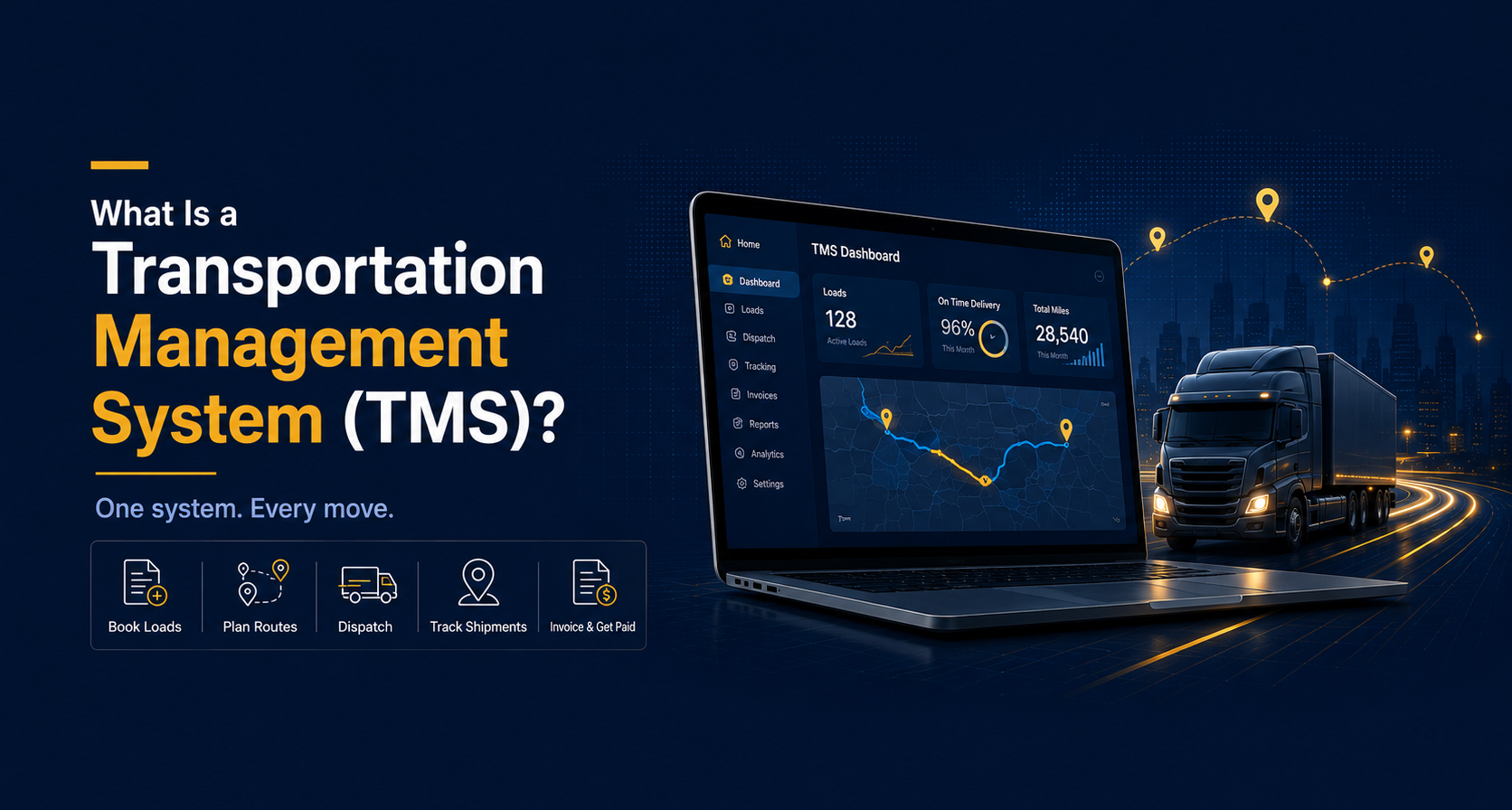
A transportation management system, or TMS, is software that helps trucking companies, brokers, and carriers plan, book, dispatch, and track freight from one place. Instead of juggling phone calls, spreadsheets, and separate tools for billing and route planning, a TMS pulls those tasks into a single platform.
For a small carrier or owner-operator, a transportation management system can be the difference between manually tracking loads on paper and running an operation that scales without adding headcount for every new truck.
What a TMS Actually Does
A transportation management system centralizes the work that goes into moving freight from pickup to delivery. Rather than replacing the people doing that work, it gives them one place to plan, execute, and review it.
Most TMS platforms handle four core jobs: booking and tendering loads, planning routes, tracking shipments in real time, and settling invoices once a load delivers. The exact feature set varies by provider, but those four jobs form the backbone of nearly every transportation management system on the market.
Core Features of a TMS
Every TMS is built around a handful of functions that carriers and dispatchers use daily. Here's what each one actually covers.
Load Planning and Booking
A TMS lets a carrier or broker post, accept, and organize loads without switching between a load board, a spreadsheet, and a phone. Some platforms also compare carrier rates automatically, so a carrier leads for freight brokers team can select the best carrier for a given lane without leaving the platform
Route Optimization
Route planning tools inside a TMS calculate the most efficient path for a load, factoring in distance, fuel cost, and sometimes traffic or weather. For a fleet running multiple trucks, this adds up to real savings on fuel and driver hours over time.
Dispatch and Tracking
Once a load is booked, a TMS assigns it to a driver and tracks its progress. Many platforms integrate with GPS or ELD data, so a freight dispatcher leads desk can see exactly where a truck is without calling the driver directly.
Billing and Invoicing
A TMS typically generates invoices automatically once a load is marked delivered, and some platforms also handle driver settlements and IFTA reporting. This overlaps with what a freight factoring provider often watches for, since a clean, automated invoice is usually the first one they see.
Reporting and Analytics
Most systems include dashboards that show cost per mile, on-time delivery rates, and other performance metrics. For a growing fleet, this data becomes the basis for deciding which lanes are profitable and which aren't.
Who Uses a TMS
A transportation management system isn't limited to large fleets. Shippers use a TMS to manage outbound freight, brokers use it to source carriers and negotiate rates, and carriers use it to run day-to-day dispatch operations. Third-party logistics providers, or 3PLs, often run a TMS to coordinate between all three groups at once.
The common thread is volume. Once a business is moving enough freight that manual coordination starts causing missed loads or billing errors, a TMS becomes less of a convenience and more of a necessity.
TMS vs. Fleet Management Software: What's the Difference
These two categories get confused constantly, and the overlap in marketing language doesn't help. The clearest way to separate them is by what each one is actually built to manage.
A TMS is built around the freight itself: booking loads, planning routes, dispatching drivers, and billing customers. Fleet management software is built around the vehicles: maintenance schedules, fuel consumption, driver safety scores, and vehicle location. A TMS answers "how do we move this load," while fleet management software answers "how do we keep this truck running."
Many providers blend features from both categories, which is part of why the line looks blurry from the outside. A growing carrier often ends up using both, a TMS for freight operations and fleet management software for vehicle upkeep, sometimes from the same vendor and sometimes from two different ones.
Does a Small Trucking Company Need a TMS?
For a single-truck owner-operator, a full TMS is often more than what the operation needs day to day. A notebook, a load board, and a few phone calls can still get the job done at that scale.
The calculation changes once a carrier grows past a handful of trucks. At that point, tracking loads manually starts costing real time and money, whether it's a missed rate confirmation or a delayed invoice. This is often the same stage where a carrier's USDOT and MC authority history starts mattering more too, since a growing fleet usually means more scrutiny from brokers and insurers alike.
How a TMS Fits Into a Carrier's Daily Operations
A TMS usually sits at the center of the workday for a dispatcher or small fleet owner. The morning starts with checking which loads are booked, which drivers are available, and what needs to be dispatched first.
From there, the system tracks each load through pickup, transit, and delivery, often flagging delays or exceptions automatically instead of requiring a phone call to catch a problem. Billing tends to happen at the end of that cycle, once a load is confirmed delivered and ready to invoice. Many carriers manage this same follow-through in TruCRM, moving a load or a carrier relationship from first contact to closed without losing track of where things stand.
None of this replaces the judgment calls that come with running a fleet. What a TMS does is remove the manual tracking that used to eat up hours of a dispatcher's day, so that time can go toward decisions that actually need a person. The same live data that powers TruckScribe's carrier records is often what feeds a TMS in the first place, keeping authority and contact details current as a fleet grows.Frequently Asked Questions
What's the difference between a TMS and an ERP?
An ERP manages a company's broader operations, finance, inventory, and procurement across the whole business. According to IBM, a TMS is narrower and focused specifically on transportation execution: booking, dispatch, tracking, and freight billing. Larger companies sometimes run both, with the TMS feeding data into the ERP.
Do owner-operators need a TMS?
Most single-truck owner-operators can manage without one, relying on a load board and manual tracking instead. A TMS tends to make more sense once an operator adds trucks or starts handling enough loads that manual coordination becomes unreliable.
Is a TMS the same as dispatch software?
Dispatch software is typically one piece of what a TMS does. A full transportation management system usually includes dispatch functionality alongside load booking, route planning, and billing, rather than covering dispatch alone.
How much does a TMS typically cost?
Pricing varies widely depending on fleet size and feature set, ranging from affordable monthly plans built for small carriers to enterprise pricing for large fleets with complex multimodal needs. Most providers price by number of trucks, users, or loads processed.
Can a TMS work without integrating with an ELD?
Yes, a TMS can function without ELD integration, though most modern platforms support it. Without that integration, tracking and hours-of-service data typically has to be entered manually instead of syncing automatically.