A DOT audit is a compliance review the FMCSA conducts to examine a motor carrier's safety records, driver files, and operating practices. It exists to confirm a carrier is following federal safety regulations, and it can result in anything from no action at all to a downgraded safety rating that puts a carrier's authority at risk.
Most carriers never see a random audit. When one happens, it is almost always because something in the carrier's record triggered it, whether that is a pattern of violations, a serious accident, or simply reaching a new entrant milestone.
Understanding how these audits work matters well beyond the carrier being reviewed. Brokers, factoring companies, and insurance agencies all read a carrier's audit history as part of deciding whether to work with them, which means the outcome of a single review can ripple into business relationships that have nothing to do with the FMCSA directly.
What Is a DOT Audit?
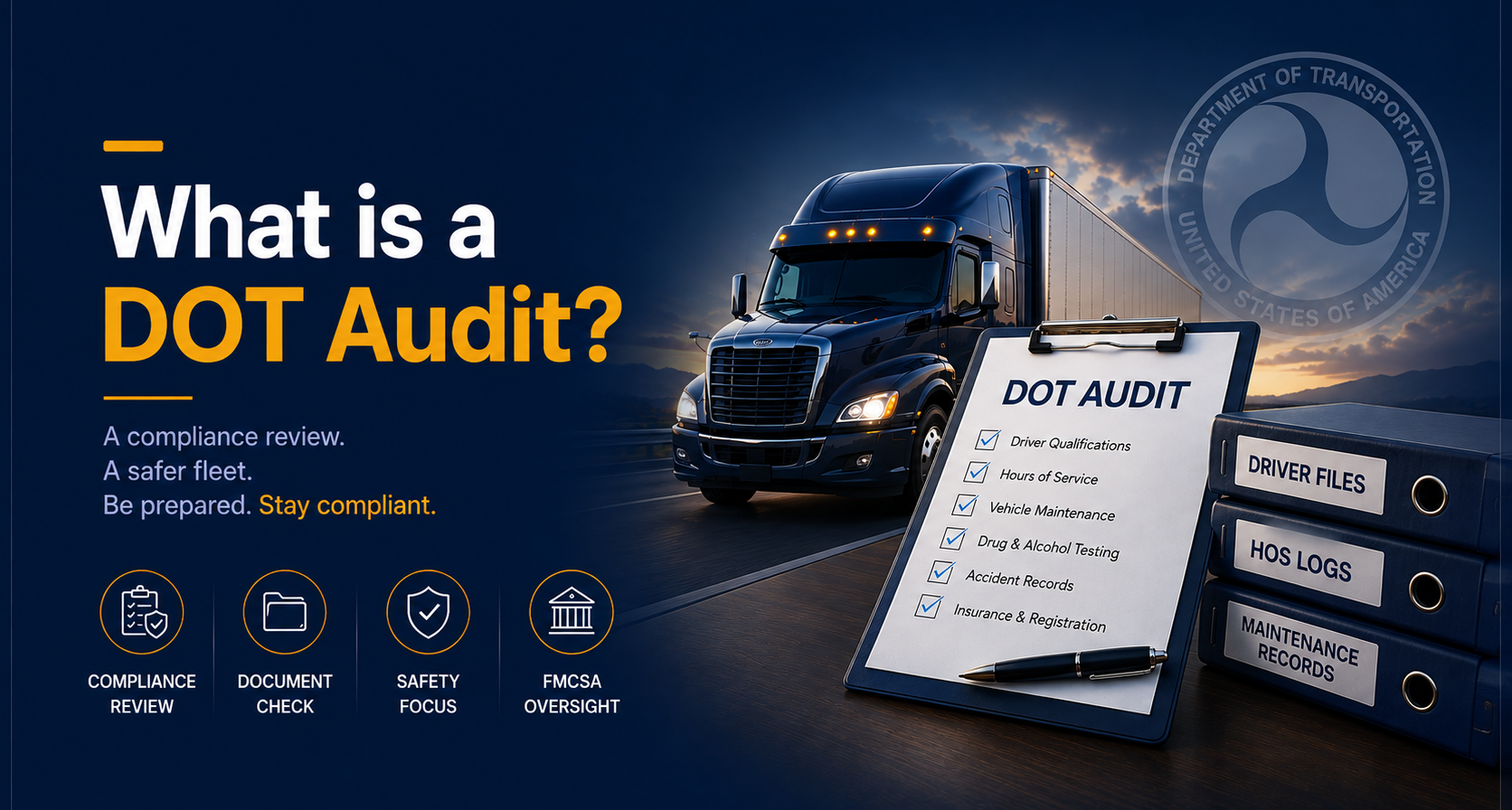
A DOT audit, sometimes called a compliance review, is a formal examination conducted by the FMCSA or a state partner agency to verify that a motor carrier is meeting federal safety standards. Auditors review documentation like driver qualification files, hours of service logs, vehicle maintenance records, and drug and alcohol testing programs.
The purpose is not punitive by default. A DOT audit is meant to confirm a carrier has functioning safety management controls in place, similar in spirit to how a carrier vetting process confirms a carrier is legitimate before a broker or factoring company works with them, just from the regulator's side instead of a business partner's.
The distinction matters because carriers sometimes assume any FMCSA contact is adversarial. In practice, most audits confirm a carrier's paperwork matches its operations, and a carrier with organized records and a genuinely functioning safety program typically comes through a review without any negative outcome at all.
Types of DOT Audits
Not every audit looks the same. The FMCSA runs several distinct types, each triggered differently and each covering different ground.
New Entrant Safety Audit
Every new carrier is required to undergo this audit within its first 12 months of operation, following issuance of a Provisional Certificate of Registration. This is covered in full detail in the FMCSA New Entrant Safety Program guide, since it is the one audit type nearly every new authority will encounter regardless of its safety record.
Targeted Compliance Review
This is triggered by specific red flags in a carrier's safety data, most commonly a high CSA score, a serious accident, or a pattern of roadside violations. It is the most common audit type outside the new entrant category.
Security Audit
This examines a carrier's safety training and security plan rather than its general operations, and is less common than the other types.
Hazardous Materials Audit
This applies specifically to carriers hauling hazmat freight, and focuses on shipping paperwork, proper labeling, placarding, and driver training for hazardous cargo.
Each type follows the same general review process, but the documentation an auditor asks for shifts depending on which category applies. A general freight carrier facing a targeted compliance review will not be asked for hazmat placarding records, while a tanker carrier hauling regulated chemicals almost certainly will.
What Triggers a DOT Audit
Outside the mandatory new entrant audit, the FMCSA prioritizes carriers for review based on a handful of consistent factors.
- High CSA scores, particularly carriers with two or more BASICs in alert status
- Serious accidents, especially those involving fatalities or significant injury
- Roadside violations that place a driver or vehicle out of service
- Safety complaints from the public, employees, or other drivers
- Random selection, though this accounts for a small share of total audits
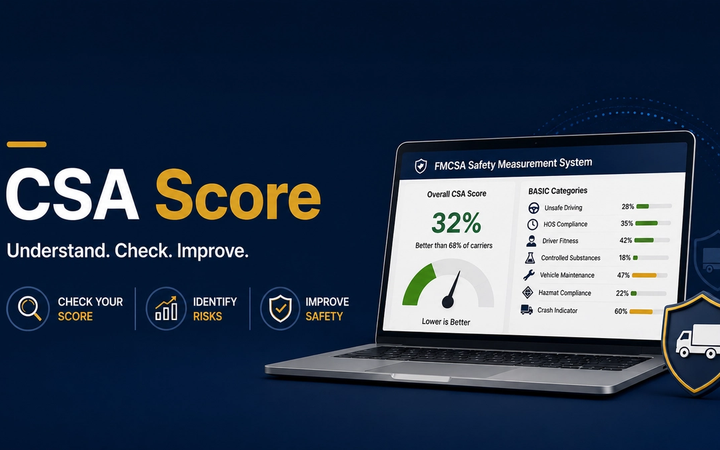
CSA scores carry more weight than most carriers realize. High scores triggered nearly 7,500 carrier audits in a single recent year, accounting for roughly three quarters of all audits conducted, which makes a carrier's Safety Measurement System standing the single biggest factor in whether it gets selected.
What a DOT Audit Actually Reviews
Auditors work through a defined set of documentation during a compliance review, and most of it centers on whether a carrier can prove its safety practices on paper, not just in theory.
- Driver qualification files, including licensing and medical certification
- Hours of service records and logs
- Vehicle maintenance files and inspection reports
- Drug and alcohol testing program records
- Accident register and insurance documentation
A carrier's USDOT and MC number registration details also get cross-checked during this process, since the audit confirms the operational reality matches what was reported at registration.
An auditor is not simply checking that documents exist. Many reviews look for internal consistency, whether an HOS log matches fuel receipts and toll records from the same trip, for example. Gaps or contradictions between different document types are often what turns a routine review into a more detailed investigation.
What Happens If a Carrier Fails a DOT Audit
A carrier is typically notified of the audit outcome within 45 days of its completion. The result lands in one of three categories: Satisfactory, Conditional, or Unsatisfactory, and only a small share of audited carriers ever receive a formal rating at all, since many operate for years without ever being reviewed.
A Conditional rating sits in the middle. It signals that a carrier has deficiencies in its safety management controls, but not severe enough to warrant an Unsatisfactory rating outright. Carriers in this category are typically given a window to submit a corrective action plan before the FMCSA revisits the rating.
An Unsatisfactory rating is serious. It can lead to fines, a required corrective action plan, and in severe cases, the FMCSA can revoke a carrier's operating authority entirely. This is also the point where the audit outcome starts affecting business relationships well beyond the FMCSA itself. An insurance agency reviewing a carrier's file will treat a downgraded rating as a real underwriting signal, and a freight broker vetting a carrier before tendering a load is checking for exactly this kind of red flag.
A factoring company funding a carrier's invoices has similar exposure, since a carrier facing an audit downgrade or authority action is a materially different risk than one with a clean, unreviewed record. This is part of why a carrier's TruScore weighs safety posture and authority track record as separate factors rather than treating every carrier's paperwork at face value.
How to Prepare for a DOT Audit
Carriers that keep organized, current records rarely struggle with an audit, regardless of what triggered it. Driver files, HOS logs, and maintenance records being ready to produce on short notice is usually the difference between a routine review and a stressful one.
A carrier does not need to wait for an audit notice to find out where its records stand. Reviewing the same documentation an auditor would ask for on a regular basis, well before any audit is triggered, is the most reliable way to avoid a downgraded rating.
Some carriers run an internal mock audit using the same checklist categories an FMCSA auditor would use, which surfaces gaps in driver files or maintenance documentation while there is still time to fix them. This is especially useful for a new authority approaching its mandatory review window, since the new entrant audit is not optional and cannot simply be avoided by staying under the radar.
Keeping a designated point of contact who knows where every required document lives also matters more than it sounds. Audits often move quickly once scheduled, and a carrier scrambling to locate scattered paperwork across different systems tends to fare worse than one with a single, organized file ready to hand over.
Digital recordkeeping has made this considerably easier than it used to be. A carrier storing driver files, HOS data, and maintenance records in one connected system can typically pull everything an auditor requests within minutes, rather than spending days tracking down paper files across multiple locations or several years of filing cabinets.
Frequently Asked Questions
How long does a DOT audit take?
Length varies by audit type and the size of the carrier's operation, but most carriers receive their audit outcome within 45 days of the review's completion.
Can a carrier appeal a DOT audit result?
Yes. A carrier can request a rating change and submit documentation showing corrective action was taken, and cases with well-documented safety improvements are sometimes able to get a downgraded rating reversed.
Does every new carrier get audited?
Yes. Every new carrier is required to complete a new entrant safety audit within its first 12 months of operation, regardless of its safety record up to that point.
What is the difference between a DOT audit and a roadside inspection?
A roadside inspection is a spot check of a specific truck and driver during operation. A DOT audit is a broader review of a carrier's overall safety records and management systems, often prompted by patterns seen across multiple roadside inspections.
Is a DOT audit the same as a CSA score review?
Not exactly. A CSA score is an ongoing measurement based on inspection and crash data, while a DOT audit is a formal review that can be triggered partly because of that score. According to the Federal Motor Carrier Safety Administration, compliance reviews use CSA data as one input among several when deciding which carriers to prioritize.