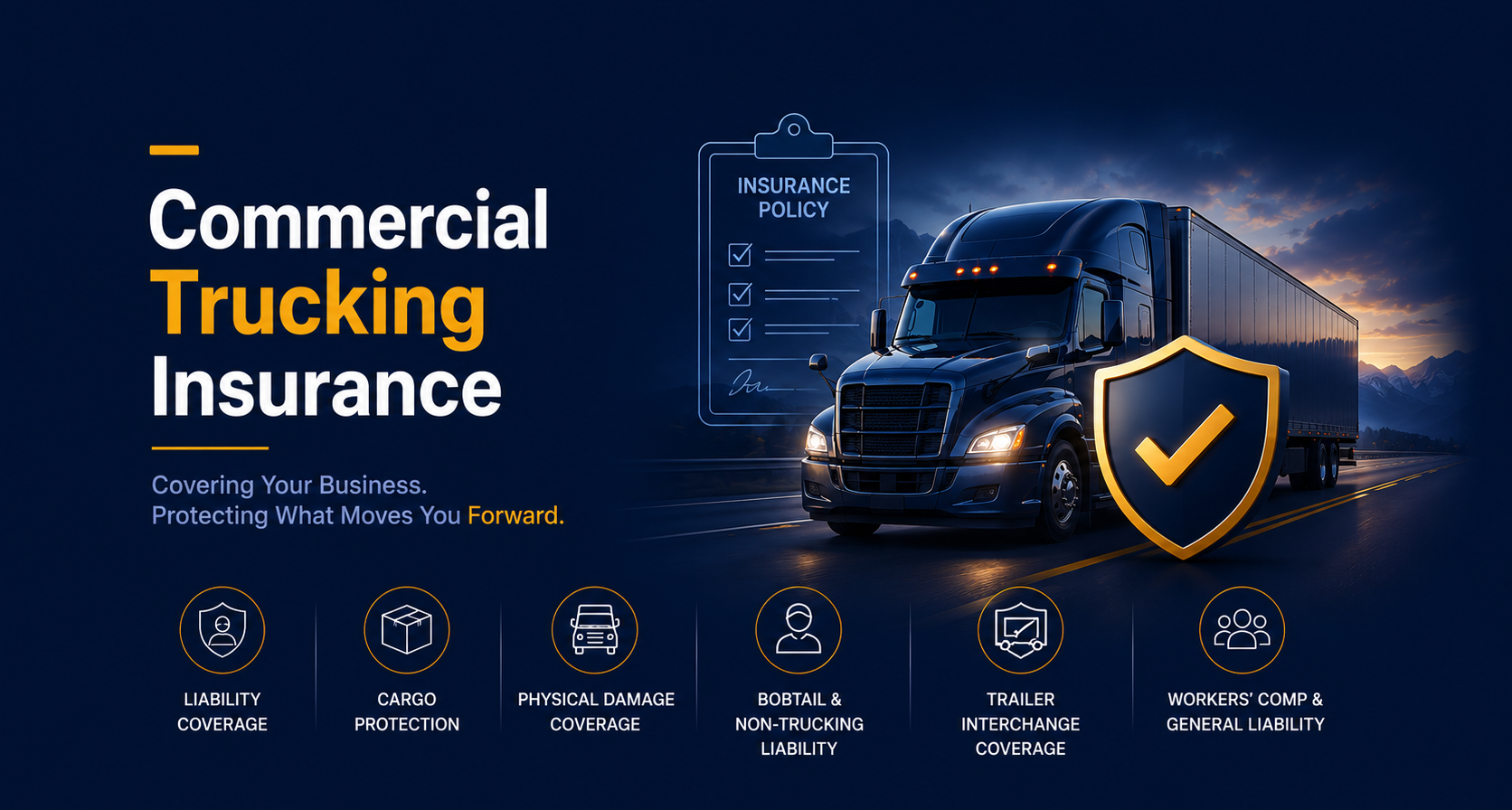
Commercial trucking insurance is a group of coverage types that protects a trucking company, its drivers, and the cargo it hauls against financial loss from accidents, theft, cargo damage, and liability claims. It is not one single policy. Most carriers carry a combination of several coverage types, each protecting against a different kind of risk.
The FMCSA requires a minimum level of liability coverage before any carrier can legally operate under an active authority, filed through a BMC-91 or BMC-91X form. Beyond that federal minimum, most brokers and shippers require additional coverage before they will tender a load, which means the insurance a carrier actually needs is often broader than the bare legal minimum.
Why Commercial Trucking Insurance Exists
A commercial truck carries far more risk than a personal vehicle. It travels longer distances, hauls valuable cargo, and can cause significantly more damage in an accident due to its size and weight. Standard personal auto insurance does not cover any of this, and neither does a typical commercial auto policy built for cars or vans.
Commercial trucking insurance is filed with the FMCSA specifically, with the USDOT number, MC authority, and BMC-91 filings built into the policy from the start. A carrier's USDOT and MC authority status has to be active before that filing means anything, since insurance without valid authority behind it does not get a carrier on the road.
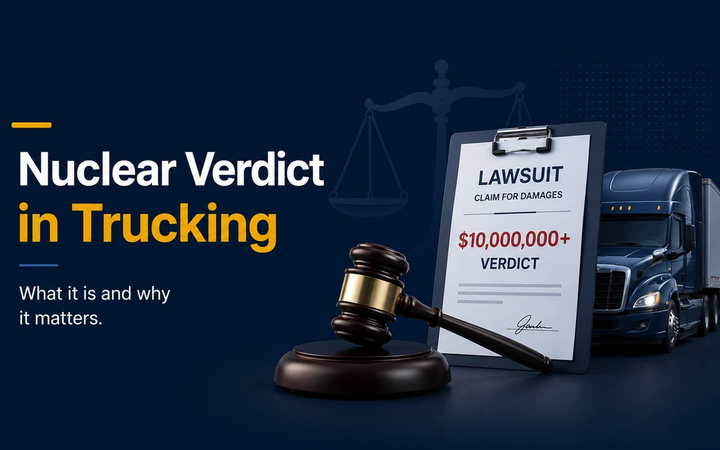
The stakes behind this requirement are real. Jury awards and settlements in commercial trucking accident cases have climbed sharply in recent years, and a single serious crash can generate a liability claim well into seven figures. A carrier without adequate coverage in place is not just non-compliant, it is one bad accident away from losing the business entirely, regardless of how careful its drivers are.
The Core Types of Commercial Trucking Insurance
Most trucking insurance policies are built from a handful of coverage types, and which ones a carrier needs depends on how they operate.
Primary Liability Insurance
This is the coverage the FMCSA legally requires. It pays for bodily injury and property damage that a carrier's truck causes to someone else in an accident. The required minimum ranges from $750,000 to $5 million depending on the type of cargo hauled, with hazardous materials carriers required to hold higher limits.
Motor Truck Cargo Insurance
Cargo insurance covers the freight itself if it is lost, stolen, or damaged while in transit. Most brokers and shippers require proof of cargo coverage before they will tender a load. FMCSA requires a minimum of $5,000 per vehicle and $10,000 per incident for household goods carriers specifically, though general freight brokers typically demand far higher limits on their own.
Physical Damage Insurance
This covers the truck and trailer themselves, split into collision coverage (accidents and rollovers) and comprehensive coverage (theft, fire, vandalism, and weather damage). Carriers that own their equipment outright, rather than leasing it, generally carry this coverage to protect their own asset, typically priced at three to six percent of the truck's value each year.
Bobtail and Non-Trucking Liability
These sound similar but cover different situations. Bobtail insurance covers a truck when it's being driven without a trailer, regardless of dispatch status. Non-trucking liability covers personal use of the truck when it isn't under dispatch at all. An owner-operator leased to a carrier often needs both to cover the full range of gaps the carrier's own policy leaves open.
Trailer Interchange Insurance
This covers physical damage to a trailer that a carrier does not own but is pulling under a trailer interchange agreement with another party. It fills a specific gap that standard physical damage coverage does not.
General Liability and Workers' Compensation
General liability covers non-driving risks, such as an injury that happens at a company's own yard or warehouse, separate from anything involving a truck on the road. Workers' compensation covers employee injuries and is typically required once a carrier has employees on payroll rather than only leased owner-operators.
Minimum Coverage Requirements
Federal minimum liability requirements are based on what a carrier hauls, not simply whether they operate interstate or intrastate.
- General freight: $750,000 minimum combined single limit liability coverage
- Oil, hazardous substances, and certain hazardous materials: $1 million to $5 million, depending on the specific classification
- Household goods carriers: separate cargo minimums of $5,000 per vehicle and $10,000 per incident, in addition to liability
These are federal floors, not ceilings. Many brokers require $1 million in liability coverage before they will work with a carrier at all, regardless of what the FMCSA technically requires for that cargo type. The FMCSA has also proposed raising the general freight minimum to $2 million or more, with a final rule possible as early as late 2026 or 2027.
What Determines the Cost
Commercial trucking insurance cost varies significantly from one carrier to the next, and a handful of factors drive most of that difference. As of 2026, a solo owner-operator with independent authority and a clean record typically pays between $9,000 and $17,000 per year for a full coverage package, while new authorities can pay $12,000 to $18,000 or more for primary liability alone before adding cargo and physical damage.
A carrier's authority age plays a real role here, since a brand-new authority with no operating history is a harder risk to price than a carrier with several years of clean claims behind it. This is closely tied to the FMCSA's 18-month new entrant monitoring period, during which a carrier's safety record is under closer review, and insurers price accordingly until that window closes. Cargo type, radius of operation, driver experience, and claims history round out the rest of what drives a quote.
Leased owner-operators typically see a very different cost picture than independent authority holders, since the carrier they lease onto usually covers primary liability. In that setup, a driver often pays $3,000 to $5,000 a year for the narrower slice of coverage they are responsible for, rather than the full stack an independent operator has to carry alone. Shopping multiple insurers rather than accepting the first quote is also one of the more reliable ways carriers keep premiums down, since pricing for the same coverage can vary substantially between providers.
Who Actually Needs Commercial Trucking Insurance
Any business operating a commercial motor vehicle for hire, or hauling regulated freight across state lines, needs some combination of this coverage. That includes owner-operators, small fleets, and larger carriers alike, though the exact mix of coverage types shifts based on whether a carrier owns its equipment, leases to a carrier, or operates entirely independently. A leased owner-operator typically only needs non-trucking liability, physical damage, and occasionally cargo, since the carrier's policy covers primary liability while the truck is under dispatch.
A carrier vetting process on the broker or factoring side often starts with confirming this exact coverage is active and current, since a lapse in insurance is one of the clearest signals that a carrier's operation has changed. This is also why insurance agencies that specialize in trucking pay close attention to authority age and filing history before quoting a new account.
How Insurance Status Fits Into a Carrier's Broader Risk Profile
Insurance is only one piece of what determines whether a carrier is a safe bet to work with. A lapsed policy, a sudden change in coverage limits, or a gap between filings can be an early signal of a bigger problem, which is exactly the kind of factor TruScore weighs alongside authority history and safety data when grading a carrier from A to F.
For teams tracking a carrier's insurance status over time rather than checking it once, TruckScribe keeps authority and filing data refreshed against the live FMCSA record, so a change shows up the same day it happens rather than at the next manual review. For freight brokers booking loads regularly, that kind of ongoing visibility matters more than a one-time check ever could.
Frequently Asked Questions
How much does commercial trucking insurance cost?
For 2026, a solo owner-operator with independent authority and a clean record typically pays $9,000 to $17,000 per year for a full coverage package. New authorities often pay more until they build a claims history, and mid-size fleets can run $40,000 to $120,000 or more depending on truck count and cargo type.
Is cargo insurance required by the FMCSA?
The FMCSA mandates a minimum cargo coverage specifically for household goods carriers, $5,000 per vehicle and $10,000 per incident. For general freight, cargo insurance isn't universally federally mandated the way liability is, though brokers and shippers commonly require it as a condition of working with a carrier.
What's the difference between bobtail and non-trucking liability?
Bobtail insurance covers a truck driven without a trailer, regardless of dispatch status. Non-trucking liability covers the truck during personal use, when it isn't under dispatch at all. They overlap in some situations but aren't identical, and many leased owner-operators carry both.
Do new trucking authorities pay more for insurance?
Generally, yes. Insurers price new authorities as a higher risk simply because there's no operating history to evaluate, and new carriers are also under the FMCSA's 18-month new entrant monitoring period, which adds another layer of scrutiny insurers factor into pricing.
Can a carrier operate without commercial trucking insurance?
No. According to the Federal Motor Carrier Safety Administration, active liability coverage must be filed and approved before operating authority can be granted or maintained. Operating without it is illegal and puts a carrier's authority at risk of being revoked.